
FEDERATION OPERATIONS
Architectural Specification — Signaling Layer
Substrate Domain: Semaphore / Fanale / Balise / Faro / Signal
Fanale/Balise is the high-speed constitutional signaling layer of the Encoded Material Systems Federation.
It observes and publishes observable state.
It does not originate transitions, grant custody, execute material change, or enforce downstream jurisdiction.
Other offices act upon the published signal according to their own constitutional responsibility.
1. Signaling Position
Semaphore occupies a privileged observation point, not a mandatory control point.
An asset may change state through the lawful action of the office that holds jurisdiction over that change.
Semaphore makes the resulting observable condition visible so that other offices, custodians, and processors can orient without delay or inference.
The signaling layer therefore precedes, accompanies, or follows other operations as required.
It does not stand as the sole gatekeeper of every transition.
2. Flow Topology (Illustrative Model)
The Federation may be usefully modeled as two continuously differentiable transport streams under directional bias, surrounded by a preserved-state loop.
Ascent Stream (Λ⁺)
Lower-entropy movement toward refinement, calibration, restoration, and focused production.
Velocity is deliberately constrained. Attention is concentrated.
Descent Stream (Λ⁻)
Higher-velocity movement toward interchange, logistics, temporary inventory, and public throughput.
Exchange and dissemination occur here.
Museum Torus (T)
A circumferential preserved-state engine that surrounds the active streams.
It neither produces nor exchanges.
It receives assets along tangential paths, freezes lineage, and prevents active velocity from degrading ancestral record.
These geometric relations are illustrative.
They describe phase relationships and directional bias.
They do not create territorial zoning or mandatory physical determinism.
3. Procedural Glyphs and Gate State
Glyphs are not ornamental.
They are the visible runtime publication of observable gate state.
A gate is a dynamic procedure made legible by Semaphore.
Every significant crossing is published in three phases:
1. Pre-Crossing
The glyph displays the intended vector and the requested transformation profile.
It announces an approaching change.
2. At-Crossing
The glyph shifts to the measurement/alignment state.
Observable conditions (weight, lineage markers, structural continuity, outstanding constraints) are published so that competent offices may calibrate.
3. Post-Crossing
The glyph transitions to the confirmed or returned state.
Custody change, release, return, or unresolved condition is made visible.
Downstream offices act according to their own authority.
Semaphore publishes the state.
It does not stamp, authorize, or adjudicate the underlying transition.
4. Phase Reference Table
| Phase Vector | Observable Event | Semaphore Glyph Role | Competent Downstream Office |
|--------------|-------------------------------|-----------------------------------|----------------------------------|
| Ascent (Λ⁺) | Refinement / Production | Production Vector Marker | Micro / Atelier |
| Calibration | Inspection | Measurement Glyph | Gnomon |
| Calibration | Classification | Sorting Glyph | Relevant custodial office |
| Transition | Registry / Custody Change | Custody-Transfer Glyph | Seal / Registro |
| Descent (Λ⁻) | Release / Exchange | Exchange-Permission Glyph | Mercantile |
| Torus (T) | Museum Accession | Stabilized-Lineage Glyph | Museo / Registro |
| Recurrence | Return / Re-entry | Reversible-State Glyph | Originating or competent office |
5. Constitutional Limits
Fanale/Balise shall not:
- interpret narrative
- evaluate quality or merit
- assign or enlarge authority
- modify constitutional state
- enforce governance
- manufacture standing
- convert visibility into endorsement
Fanale/Balise shall:
- observe published constitutional state
- verify structural continuity against the declared Basis manifold where required
- publish constitutional glyphs
- communicate observable transitions at speed
- preserve rapid, non-inferential signaling across the Federation
Canonical Separation
- Basis defines the artifact.
- The relevant constitutional office or custodian holds jurisdiction over the transition.
- Semaphore publishes the observable state.
- Registro preserves the history of observed transitions.
- Gnomon measures fidelity when measurement is required.
- Other offices act within their own bounds.
Each system retains a single constitutional responsibility.
Together they form a modular architecture rather than a monolithic control plane.
The signal makes the present state visible.
It does not become the source of the rules it reports.






🏗️
Quick refinements to consider for emssemaphore.com:
1. Make the substrate chain diagram interactive—hover/tap a node lights the corresponding glyph state.
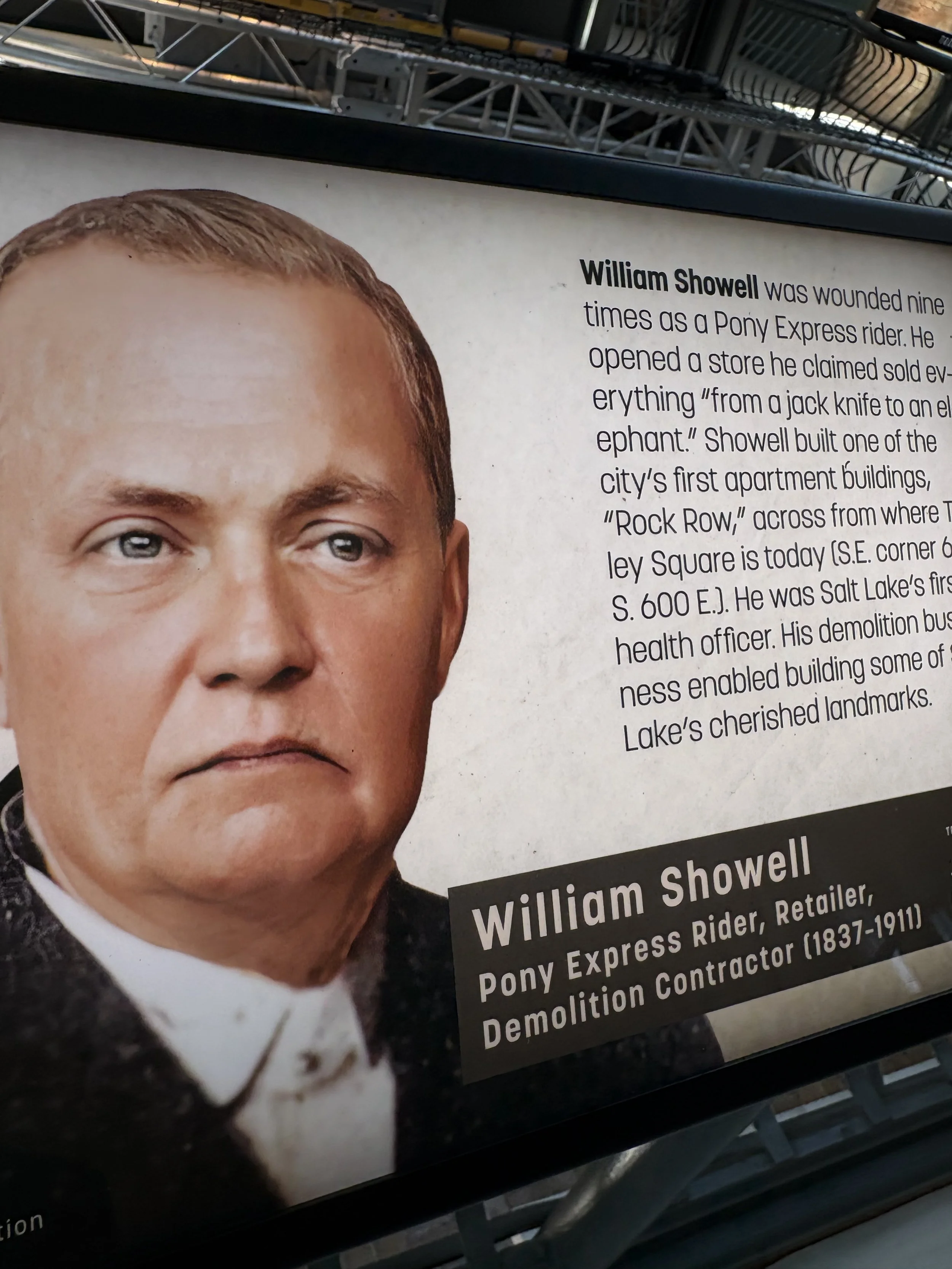
2. Add a lightweight GNOMON calibration demo: user selects an asset type → semaphore runs the tri-phase sequence using one of these portraits as the invariant reference.
3. Torus access: clicking any portrait pulls the stabilized lineage card without pulling it out of the museum loop.
Under construction by Warlock Studios and Rocklaw Gamecraft 8/21/26